
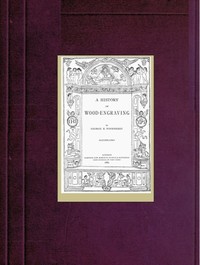
A History of Wood-Engraving by George Edward Woodberry
Published in 1883, George Edward Woodberry's A History of Wood-Engraving does exactly what the title promises, but with a warmth that technical manuals often lack. Woodberry, a poet and critic, approaches his subject not as a dry academic, but as a guide fascinated by the marriage of art and craft.
The Story
The book isn't a novel with a plot, but its journey has a clear arc. Woodberry starts at the very beginning, tracing wood-engraving's roots back to ancient China and its parallel rise in 15th-century Europe. He shows how this technique, initially used for playing cards and religious prints, became the engine of the printing revolution. The heart of the story follows the craft's evolution through the Renaissance, highlighting masters like Albrecht Dürer, who pushed woodcuts into high art. Woodberry then guides us through the industrial age, where the method was perfected for mass reproduction in newspapers and books, before reflecting on its status in his own 19th century. It’s a biography of a technology that changed how we see the world.
Why You Should Read It
What won me over was Woodberry's genuine appreciation for the engravers themselves. He makes you feel the pressure of the tool in the hand, the precision needed for a line that won't blur under the press. He talks about the art in a way that connects it to bigger ideas—about making knowledge accessible and beauty reproducible. Reading it, you gain a new lens. You'll look at an old book illustration and not just see a picture, but understand the weeks of labor, the collaboration between designer and cutter, and the physical block of wood that made it possible. It reframes the history of art and publishing into something wonderfully tangible.
Final Verdict
This is a niche book, but a rewarding one. It's perfect for history buffs who enjoy stories about technology and art intersecting, for book lovers curious about how their favorite old volumes were made, and for any creative person who finds inspiration in traditional crafts. The language is of its time, so it asks for a bit of focus, but the payoff is a deep, quiet appreciation for an art form we often overlook. It’s not a flashy page-turner; it’s a thoughtful conversation with a knowledgeable friend about the hidden backbone of printed beauty.
This title is part of the public domain archive. Enjoy reading and sharing without restrictions.
Margaret Lewis
1 year agoI came across this while browsing and it manages to explain difficult concepts in plain English. A valuable addition to my collection.
Donald Jones
3 months agoJust what I was looking for.





Michael Allen
1 year agoHigh quality edition, very readable.