
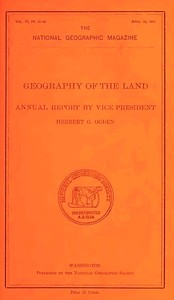
Geography of the Land by Herbert G. Ogden
Let's be clear from the start: 'Geography of the Land' is not a novel. You won't find a cast of characters or a twisting plot. Instead, Herbert G. Ogden, a chief cartographer for the U.S. Geological Survey, offers a systematic tour of the world as it was understood in the early 1900s. He starts with the basics—the shape of the earth, maps, and climate—before moving continent by continent. He describes mountains, rivers, political boundaries, resources, and major cities. The book is packed with facts, but it's framed through the lens of American commerce, exploration, and strategic interest. It's a practical guide to the planet, written with the confidence of an era that believed it could measure, categorize, and understand everything.
Why You Should Read It
This is where the book gets really interesting. Reading Ogden's descriptions today is a lesson in perspective. His language about different peoples and places reflects the attitudes of his time, which can be jarring. But that's the point. This book isn't a neutral fact sheet; it's a cultural artifact. You see what was valued (mineral deposits, trade routes) and what was overlooked. His passion for accurate mapping and the sheer wonder of discovery comes through. He writes about remote jungles and Arctic ice with a sense of adventure, reminding us that every blank spot on the map was once a mystery. It makes you think about our own modern 'certainties' and how they might look to readers a century from now.
Final Verdict
Perfect for history buffs, map lovers, and anyone curious about the stories we tell through so-called objective data. This isn't a book you race through. It's one to dip into, to ponder, and to discuss. If you approach it as a primary source—a window into 1906—rather than a modern reference, you'll find it absolutely absorbing. It’s a quiet conversation with the past, and sometimes those are the most revealing ones.
This content is free to share and distribute. Knowledge should be free and accessible.
William Gonzalez
1 year agoThe citations provided are a goldmine for further academic study.
Emily Wilson
7 months agoMy first impression was quite positive because the insights into future trends are particularly thought-provoking. Finally, a source that prioritizes accuracy over hype.
George Moore
9 months agoI appreciate how this edition approaches the core problem, the formatting on mobile devices is surprisingly crisp and clear. A refreshing and intellectually stimulating read.
Joseph Rodriguez
4 months agoI was particularly interested in the case studies mentioned here, the author doesn't just scratch the surface but goes into meaningful detail. A solid investment for anyone's personal development.





Robert Smith
1 month agoThought-provoking and well-organized content.