
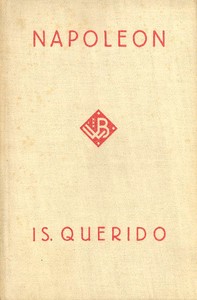
Napoleon by Is. Querido
Published in 1914, this ‘Napoleon’ trades epic battles for domestic warfare. It follows Kees Napels, a bitter and failed man who channels all his frustration into controlling his household. His wife, Bep, and their children exist in a state of nervous tension, their lives dictated by his moods and unreasonable demands. The story unfolds in their modest home, where every conversation is a potential minefield and a misplaced word can trigger a volcanic rage.
The Story
The plot is simple but powerful. We watch a single week in the life of the Napels family. Kees comes home from his dull office job and immediately begins his real work: finding fault. Dinner is never right, the children are too loud or too quiet, the house is never clean enough. His cruelty is psychological—constant criticism, belittlement, and the silent treatment. Bep tries desperately to keep the peace, smoothing over every conflict, while the children learn to make themselves small and invisible. The tension builds with each page, leading to a final, shocking act of rebellion that changes everything.
Why You Should Read It
This book got under my skin. Querido doesn't write Kees as a cartoon villain; he’s frighteningly real. You understand his deep insecurity, which makes his behavior even more chilling. The real heart of the story, though, is Bep. Her quiet endurance and the moment she finally reaches her breaking point are written with incredible feeling. It’s a story about the cost of fear and the quiet, desperate courage it takes to reclaim your life. It’s also a sharp look at how power works in the smallest, most intimate spaces.
Final Verdict
Perfect for readers who love character-driven stories that pack a punch. If you enjoy novels that explore family dynamics, psychological tension, and social observation, this hidden gem is for you. It’s not a long book, but it leaves a lasting impression. Think of it as a historical novel that feels urgently modern, a masterclass in showing how a home can become a prison. Just be prepared—it might make you look at your own family dinners a little differently.
This publication is available for unrestricted use. It is available for public use and education.
Charles Jackson
8 months agoThought-provoking and well-organized content.
Thomas Williams
1 year agoI took detailed notes while reading through the chapters and the step-by-step breakdown of the methodology is extremely helpful for students. I’ll definitely be revisiting some of these chapters again soon.
Nancy Jackson
8 months agoThe digital index is well-organized, making research much faster.
Karen Anderson
10 months agoHaving followed this topic for years, I can say that the structural organization allows for quick referencing of key points. I’ll definitely be revisiting some of these chapters again soon.



Charles Thompson
10 months agoThe layout is perfect for tablet and e-reader devices.